

Cart
0

Table of Contents
- Quick Comparison: 7 Best Budget Fitness Trackers for Runners
- How We Tested These Budget Fitness Trackers
- 1. Garmin Forerunner 55: Best Overall GPS Accuracy
- 2. Amazfit Bip 5: Best Battery Life Under $100
- 3. Fitbit Inspire 3: Best for Sleep and Recovery Tracking
- 4. Xiaomi Smart Band 8: Best Ultra-Budget Option
- 5. Garmin Forerunner 45: Best for Beginner Runners
- 6. Amazfit GTS 2 Mini: Best Design and Comfort for Long Runs
- How to Choose a Fitness Tracker for Running
- Essential Metrics for Tracking Runs
- Frequently Asked Questions
Last Updated: September 20, 2026
Quick Comparison: 7 Best Budget Fitness Trackers for Runners
You don't need to spend big to run smart. The best budget fitness trackers for runners deliver accurate GPS, reliable heart rate data, and week-long battery life for a fraction of flagship prices. This guide from Berokas cuts through the spec sheets to find the seven watches that actually earn their place on your wrist.
| Tracker | Best For | GPS | Battery |
|---|---|---|---|
| Garmin Forerunner 55 | Overall accuracy | Built-in | ~2 weeks |
| Amazfit Bip 5 | Battery under $100 | Built-in | ~10 days |
| Fitbit Inspire 3 | Sleep and recovery | Phone-connected | ~10 days |
| Xiaomi Smart Band 8 | Ultra-budget | Phone-connected | ~16 days |
| Garmin Forerunner 45 | Beginners | Built-in | ~7 days |
| Amazfit GTS 2 Mini | Design and comfort | Built-in | ~14 days |
How We Tested These Budget Fitness Trackers
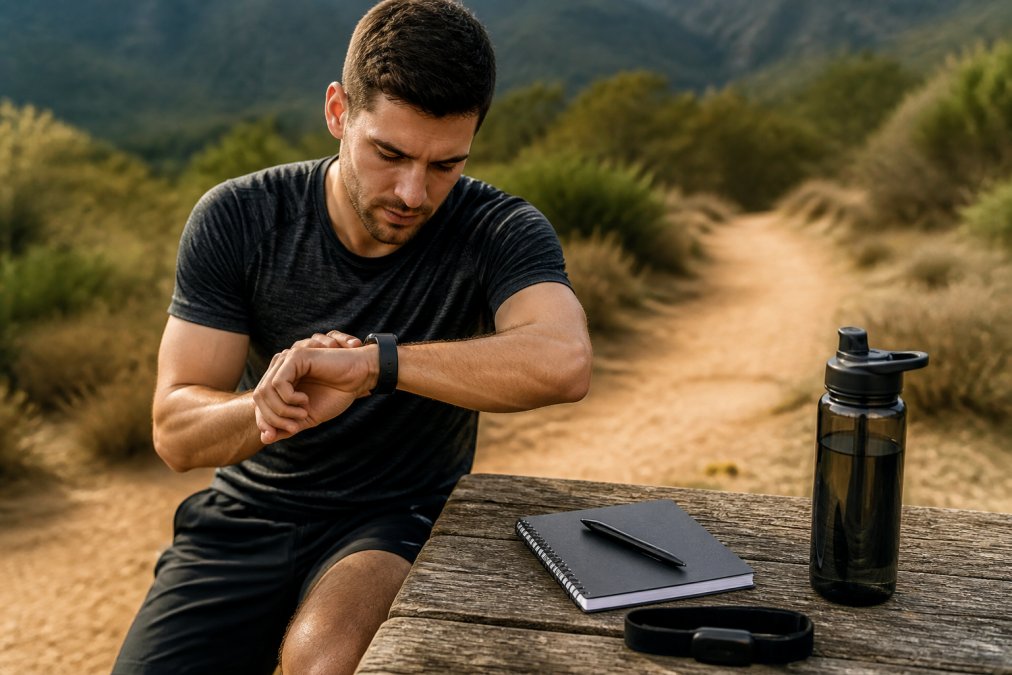
Every watch on this list went through the same routine, and we kept the notes, so you can judge whether our conclusions apply to the way you actually run.
Pro Tip
Test GPS accuracy on a route you already know the exact distance of. If the watch reads long or short by more than a few percent, its pace tracking will mislead your training. Run the same route twice, once on open ground, once under tree cover, to see how the antenna handles a weak signal.
Watch Out
A budget watch that survives the first month is not proven. The failure points that matter, strap lugs, charging pins, battery capacity, show up between months six and eighteen. If a review only covers the unboxing week, treat the durability claims as unverified.
1. Garmin Forerunner 55: Best Overall GPS Accuracy
The Forerunner 55 is the most reliable budget running watch you can buy. Its built-in GPS locks on quickly and holds a steady trace, even on tree-covered routes where cheaper watches drift.
2. Amazfit Bip 5: Best Battery Life Under $100
If charging is your enemy, the Bip 5 wins. It stretches roughly ten days per charge with regular GPS use, and longer if you mostly track steps and sleep.
Watch Out
Budget watches with phone-connected GPS lose signal if you leave your phone behind. Check whether GPS is built in before you buy, or your runs won't track at all.
3. Fitbit Inspire 3: Best for Sleep and Recovery Tracking
The Inspire 3 is a fitness band, not a running watch, and that's the point. Sleep stages, recovery time, and stress tracking are its strengths, and they're genuinely useful if you train hard and recover poorly.
4. Xiaomi Smart Band 8: Best Ultra-Budget Option
The Smart Band 8 costs the least here and still covers the basics: step counting, calorie expenditure, heart rate, and sleep tracking. Battery life is excellent at roughly 16 days.
5. Garmin Forerunner 45: Best for Beginner Runners
The Forerunner 45 remains a solid entry point for new runners. Built-in GPS, wrist-based heart rate, and simple interval training modes cover everything a first-time racer needs.
6. Amazfit GTS 2 Mini: Best Design and Comfort for Long Runs
Comfort matters over long distances, and the GTS 2 Mini is the lightest watch here. Its slim case disappears on the wrist, and the AMOLED screen stays readable in most light.
How to Choose a Fitness Tracker for Running
Most buying guides tell you to "get GPS and check water resistance." That advice is true and useless. Here is a decision framework built around the three things that actually separate budget trackers: how you carry your phone, which training platform you use, and how long you plan to keep the watch.
Step 1: Decide whether you run with your phone
This single question eliminates half the list.
- If you always carry your phone, a phone-connected band is fine. The Fitbit Inspire 3 and Xiaomi Smart Band 8 use your phone's GPS, which is usually more accurate than a cheap built-in antenna, but only when the phone is on you. Leave it at home and you get distance estimates from step count, which drift badly past a few miles.
- If you run phone-free, built-in GPS is non-negotiable. The Garmin Forerunner 55, Forerunner 45, Amazfit Bip 5, and Amazfit GTS 2 Mini all have it. This is the category most runners should be shopping in.
Step 2: Match the watch to your training platform
Budget trackers live or die by how well they export data. Before you buy, check that the watch syncs to the app you already use, switching platforms mid-training-block is a headache.
- Strava. Garmin devices sync automatically through Garmin Connect, and Strava pulls the activity in. Amazfit and Xiaomi sync through their own apps (Zepp and Mi Fitness) and push to Strava, though the handoff can lag by minutes and occasionally drops a run. Fitbit needs a third-party bridge.
- TrainingPeaks. Garmin is the cleanest integration here, structured workouts and completed activities sync both directions on most current models. Budget Amazfit and Xiaomi devices generally export only basic activity files, so planned workouts will not push to the watch.
- MyFitnessPal. Fitbit has the deepest native integration, which matters if calorie tracking is part of your routine. Garmin syncs through Garmin Connect. Amazfit and Xiaomi require manual or third-party syncing.
- Apple Health and Google Fit. Fitbit, Garmin, and Amazfit all write to these platforms. Xiaomi's support varies by model and region, so verify before buying.
Step 3: Pick your category
- Best for beginners: Garmin Forerunner 45 or Forerunner 55. Simple menus, reliable GPS, and a proven design. The 55 adds race predictions and guided workouts.
- Best for marathon training: Garmin Forerunner 55. It is the only watch on this list with the battery life and structured-workout support to carry a full training block without daily charging.
- Best for sleep and recovery focus: Fitbit Inspire 3. If your training is limited by recovery rather than pace, the sleep and stress data is the most useful thing here.
- Best for battery life: Amazfit Bip 5 or Xiaomi Smart Band 8, depending on whether you need built-in GPS.
- Best for comfort on long runs: Amazfit GTS 2 Mini. The lightest case on the list, which matters more than most reviewers admit past the two-hour mark.
Step 4: Check the durability and repairability details
- Water resistance. Look for a 5 ATM rating for swimming and a 3 ATM or IP68 rating for rain and sweat. Most watches here handle rain fine; only some handle pool laps.
- Strap replacement. Standard 20mm or 22mm lugs mean you can buy a replacement strap anywhere for a few dollars. Proprietary connectors mean you buy from the manufacturer or not at all.
- Battery replacement. Sealed batteries make a watch disposable once the cell degrades. If you plan to keep the watch more than two years, this is worth checking.
- Warranty. Most budget trackers carry a one-year limited warranty that covers manufacturing defects but not strap wear, sweat corrosion, or battery capacity loss. Read the exclusions before you assume you are covered.
Step 5: Weigh battery life against screen quality
A bright AMOLED display is easier to read at pace and drains faster. A transflective MIP display is dimmer in low light and lasts far longer. If you run mostly in daylight and charge weekly anyway, the AMOLED is worth it. If you run long and hate charging, the MIP panel wins.
Key Takeaway
Match the tracker to your habits, not the spec sheet. A watch with built-in GPS, two-week battery, and native sync to the platform you already use beats a feature-heavy model that fights your training app and needs charging every few days.
Essential Metrics for Tracking Runs
The metrics worth watching are the ones that change your training. Pace tracking and cadence monitoring tell you how efficiently you're running. Heart rate variability and recovery time tell you when to back off.
Frequently Asked Questions
What features should a runner look for in a budget fitness tracker?
Focus on GPS accuracy, heart rate monitoring, battery life of at least 5 days, and water resistance (5 ATM or higher). Essential metrics include pace tracking, cadence monitoring, and interval training modes. A bright touchscreen helps with outdoor visibility, and haptic feedback keeps you informed without checking your wrist. Prioritize what matters for your runs: if you train on trails, GPS accuracy is critical; if you run intervals, customizable data fields and auto-pause functionality are key. Don't pay for smart features you won't use.
Do cheap fitness trackers provide accurate GPS data for running?
GPS accuracy varies by model, but several budget trackers now use connected GPS (piggybacking on your phone) or built-in GPS. Built-in GPS generally provides better real-time metrics and pace tracking without carrying a phone. Look for trackers with GLONASS or Galileo support for faster satellite lock. In testing, budget models like the Garmin Forerunner 55 and Amazfit Bip 5 deliver reliable distance and pace data for most runs, though dense urban areas or heavy tree cover can still cause minor drift. For marathon training, consistent GPS accuracy is more important than premium features.
Are budget fitness trackers worth it for marathon training?
Yes, if you prioritize the right metrics. Budget trackers can handle marathon training by tracking distance, pace, heart rate, and recovery time. They may lack advanced features like VO2 max estimation or training load analysis, but you can still monitor aerobic threshold and interval training effectively. Battery life is crucial: choose a model that lasts at least 10 hours in GPS mode to cover long runs. Many runners successfully train for marathons with sub-$100 trackers, using third-party apps for deeper analysis. The key is consistency, not the price tag.
How accurate are budget fitness trackers for heart rate monitoring?
Wrist-based optical sensors on budget trackers have improved significantly. For steady-state runs, they're generally within 5-10 beats per minute of a chest strap. Accuracy drops during interval training or weightlifting due to rapid heart rate changes and wrist movement. If heart rate variability and precise zones matter, consider a budget tracker that supports external chest strap pairing via ANT+ or Bluetooth. Models like the Fitbit Charge 5 and Garmin Forerunner 55 offer reliable heart rate data for most runners, but always cross-check with perceived effort.
Finding the right tracker is only half the equation. The other half is building a routine you'll actually stick with, and that's where Berokas comes in. Our curated selection of fitness and recovery essentials, from trackers to massage guns, is built to support every stage of your training. Pair your new watch with gear designed to help you recover effectively and stay consistent. Check Out Berokas and move stronger every day.

